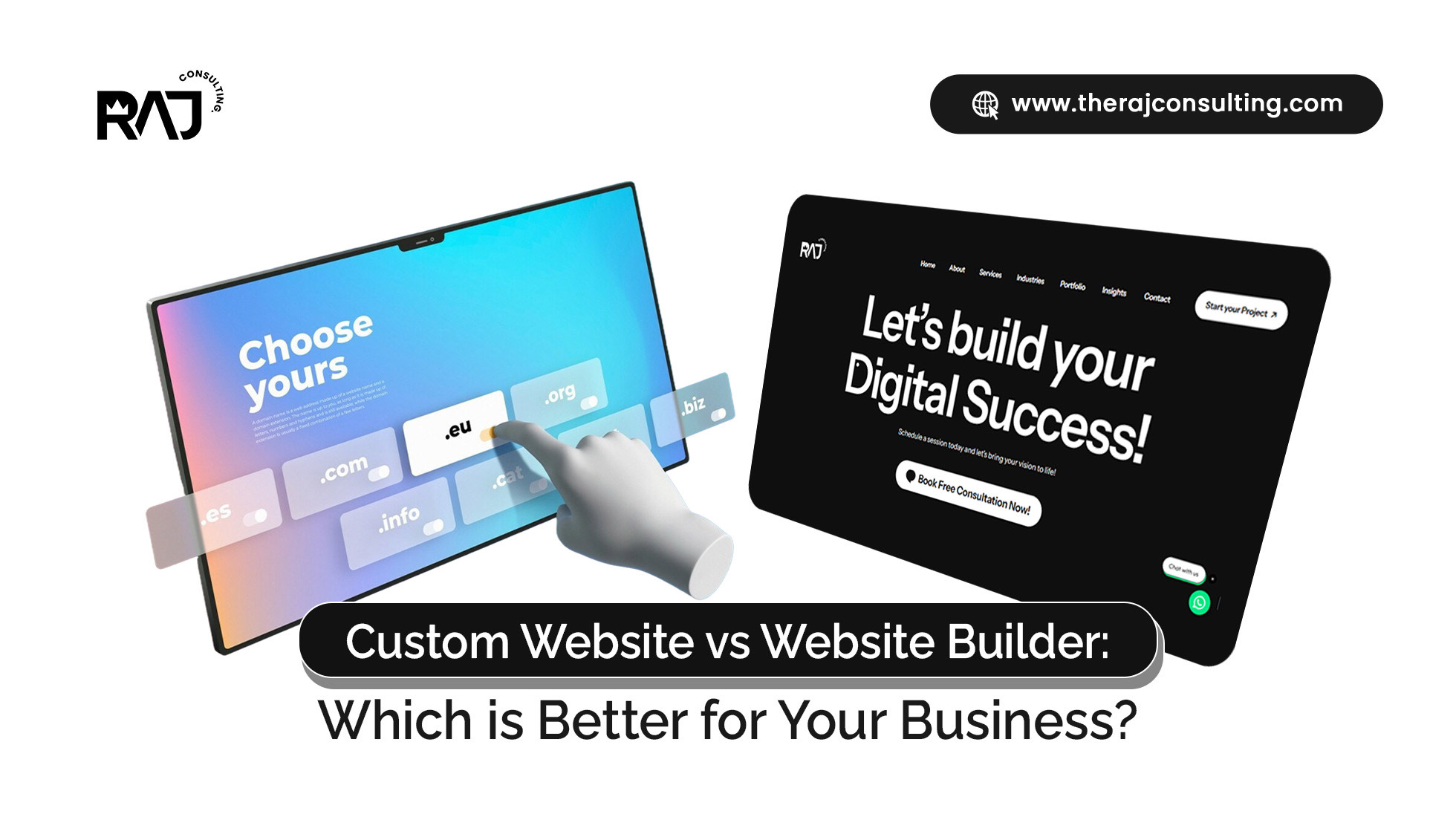
If you’re deciding between a custom website vs website builder, you’re probably asking a bigger question: what’s actually best for my business?
With platforms such as Wix, Squarespace, Shopify and other website builders making it possible to launch a website without coding, building a website has become more accessible than ever.
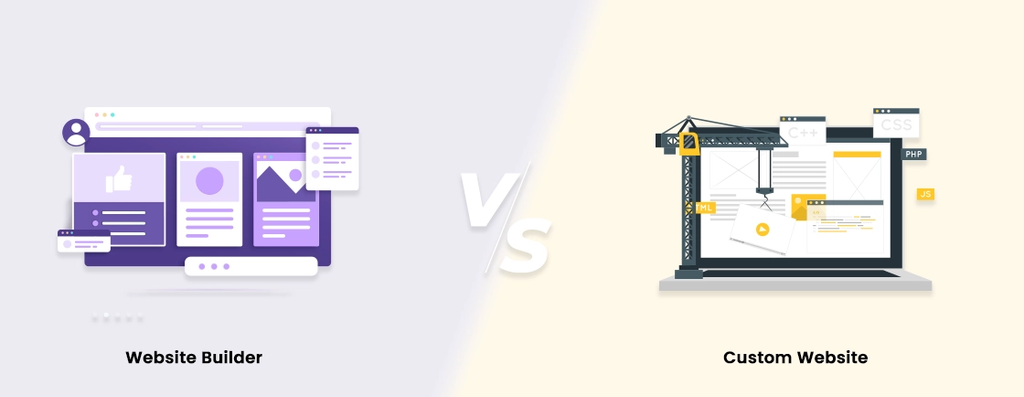
At the same time, custom website development gives businesses far more control over how their website looks, works and grows.
Neither option is automatically better.
A small business that needs a simple online presence may not need an expensive custom website. However, a growing company with specific functionality, complex requirements or plans to scale may eventually outgrow a website builder.
The right choice depends on what you need your website to do, not simply how much you want to spend.
What Is a Website Builder?
A website builder is a platform that allows you to create a website using pre-built templates, visual editors and ready-made features.
Popular examples include:
These platforms handle much of the technical infrastructure for you.
You typically choose a template, customize the design, add your content and publish the website.
For someone who needs a relatively simple website quickly, this can be a practical solution.
What Is a Custom Website?
A custom website is designed and developed specifically for your business rather than relying primarily on a pre-designed template.
A development team can build the website around your:
- Brand identity
- Customer journey
- Business processes
- Functional requirements
- Marketing goals
- Future plans
This gives you considerably more flexibility.
For example, a business may need a customer portal, custom booking system, payment integration, business dashboard or connection to another software system.
Those requirements may be difficult to achieve properly with a standard website-builder setup.
Custom Website vs Website Builder: The Key Differences
| Factor | Website Builder | Custom Website |
| Initial cost | Usually lower | Usually higher |
| Setup speed | Faster | Longer |
| Design flexibility | Moderate | Very high |
| Custom functionality | Limited to available tools/integrations | Highly flexible |
| Scalability | Depends on platform | Highly scalable |
| Technical control | Limited | Greater control |
| Maintenance | Often platform-managed | Requires ongoing management |
| Best for | Simple websites | Complex/growing businesses |
Let’s look at these differences more closely.
1. Cost
Website builders generally have lower upfront costs because you’re using an existing platform and its infrastructure.
However, remember that you’re often paying recurring subscription fees for hosting, features or other services.
A custom website typically requires a larger initial investment because you’re paying for design, development, testing and implementation.
If your business needs a website that generates leads, processes payments or integrates with your internal systems, choosing the cheapest option could create limitations later.
Think beyond the initial price, ask what the website will be worth to your business over the next few years.
2. Speed of Development
If you need a website quickly, a website builder has a clear advantage.
You can select a template, add your content and launch relatively quickly.
Custom websites require more planning.
The process may involve:
- Requirements gathering
- Sitemap development
- UX planning
- Wireframing
- UI design
- Development
- Testing
- Content implementation
- Launch
That takes more time, but the result is designed around your specific needs.
3. Design Flexibility
Website builders give you templates and design components that make building easier.
That’s convenient, but it can also create limitations.
Your website may end up looking similar to hundreds of other websites using the same template.
With custom website development, the design can be created specifically around your:
- Brand colours
- Typography
- Visual identity
- Customer journey
- Content
- Conversion goals
This is particularly important for businesses competing in crowded markets.
Your website shouldn’t just look professional, it should look like your business.
4. Functionality
This is one of the biggest differences between the two options.
A website builder gives you a collection of existing features and integrations.
For a standard business website, that’s often enough.
You may need:
- Contact forms
- Booking
- Blog
- Online payments
- Newsletter signup
- Social media integration
But what happens when you need something more specific?
Perhaps you want:
- A custom customer dashboard
- A unique booking system
- Automated workflows
- A business management portal
- A custom calculator
- Integration with proprietary software
- Complex user permissions
That’s where custom development becomes much more valuable.
5. SEO
Both website builders and custom websites can be optimised for search engines.
The platform alone doesn’t determine whether you’ll rank.
Your:
- Content
- Keyword targeting
- Technical SEO
- Website structure
- Page speed
- Mobile experience
- Internal linking
- Backlinks
- Search intent
all matter.
However, custom development can give you greater control over technical elements when your SEO requirements become more sophisticated.
And regardless of which option you choose, having a website doesn’t automatically mean Google will send you traffic. SEO requires an ongoing strategy.
6. Which Is Better for Your Business?
Here’s the simplest way to look at it.
A website builder may be suitable if:
- You’re a new or very small business
- You need a basic website
- Your budget is limited
- You need to launch quickly
- You don’t require complex functionality
- You’re comfortable working within platform limitations
A custom website may be better if:
- Your business is growing
- Your website is a major source of leads
- You need unique functionality
- You require third-party integrations
- You want complete control over the user experience
- You need a website designed around your business processes
- You expect your requirements to become more complex
Questions to Ask Before Choosing
Before you decide between a custom website and a website builder, answer these questions:
1. What is the main purpose of the website?
Is it primarily for credibility, lead generation, e-commerce or delivering a software service?
2. What features do you need?
Write them down before choosing a platform.
3. How much control do you need?
Do you need complete control over design and functionality?
4. What’s your growth plan?
Think beyond the next six months.
5. Who will maintain it?
Don’t launch a website without considering what happens afterward.
6. What’s your actual budget?
Consider development, domain, hosting, maintenance, content and marketing, not just the initial build.
So, custom website vs website builder, which is better?
Neither is universally better.
A website builder can be an excellent choice for businesses that need something simple, affordable and quick to launch.
A custom website makes more sense when your business needs greater flexibility, unique functionality, stronger control or room to scale.
The most important thing is to avoid choosing a website solution simply because it’s popular or cheap.
Choose based on what your business needs your website to accomplish.
If you’re still deciding what type of website your business needs, you may also want to read our guide on How Much Does It Cost to Build a Website in Nigeria in 2026? It breaks down the different types of websites and what businesses should expect to budget for them.
Ready to Build the Right Website for Your Business?
At Raj Consulting, we don’t believe every business needs the same website.
We design and develop business websites, e-commerce platforms, landing pages and custom web solutions based on what your business actually needs, not simply what’s easiest to build.
If you’re unsure whether you need a website builder or a custom solution, book a consultation with us.
We’ll help you determine the right approach for your business, budget and growth plans.